Sep 23, 2026
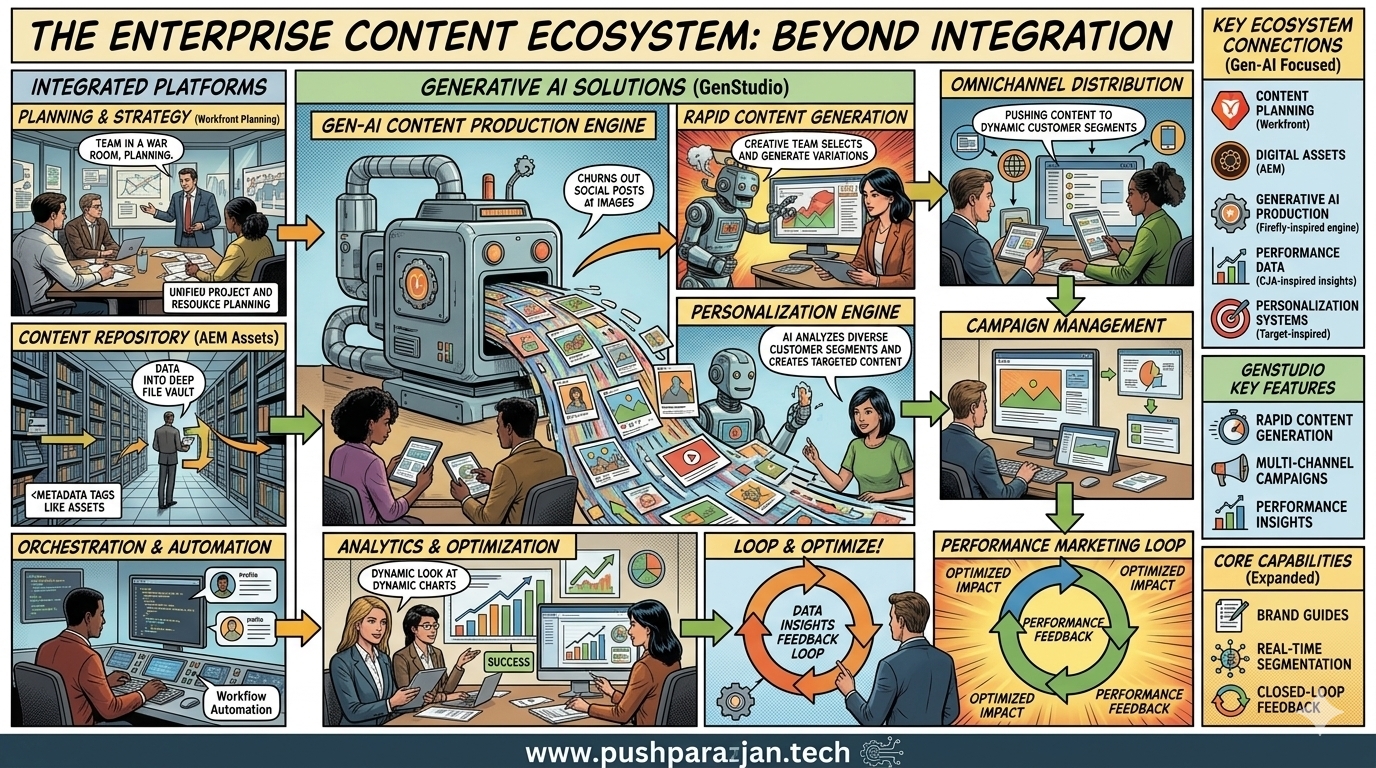
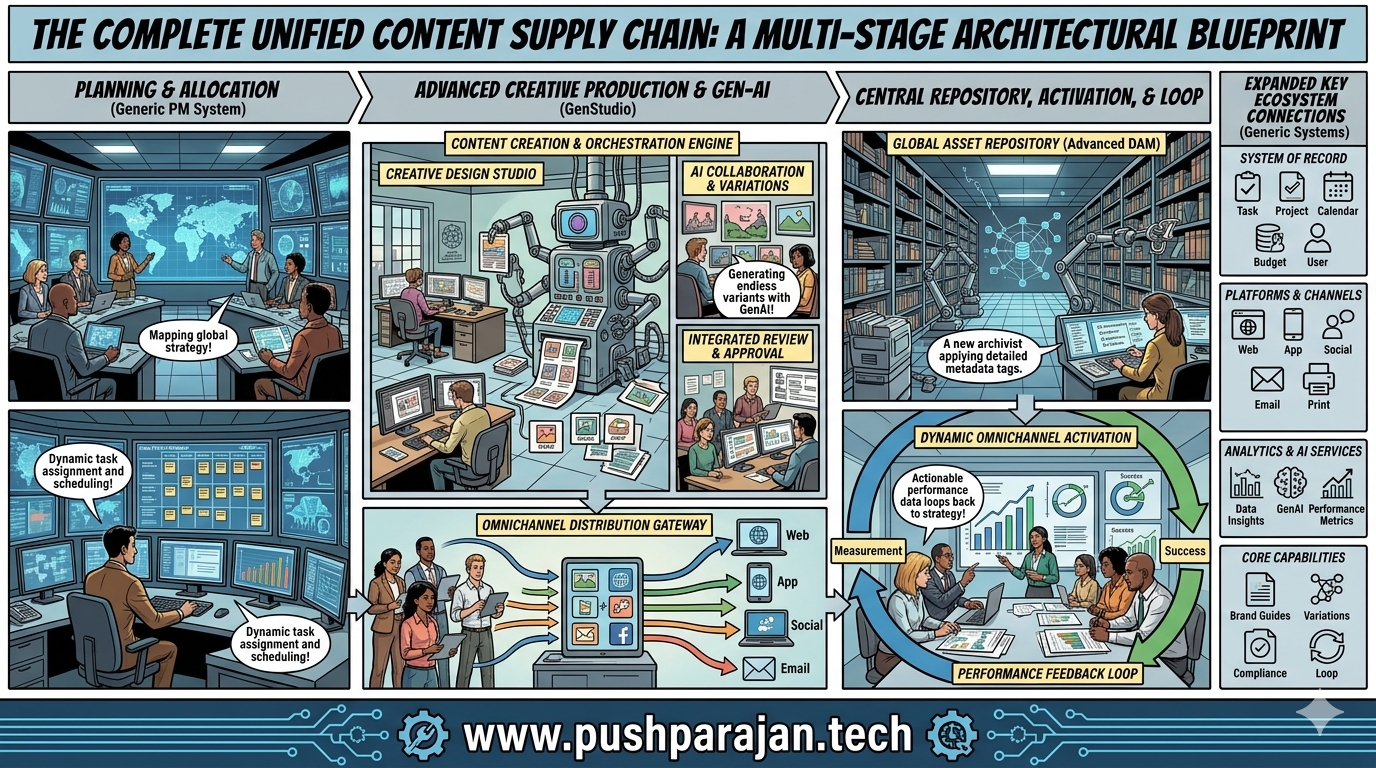
Scope check for developers: what GenStudio for Performance Marketing implements, and which layers of the content supply chain it leaves to other systems.
Why a user in the Adobe org still can't open GenStudio: product profiles, group-linked entitlements and what to automate in onboarding.
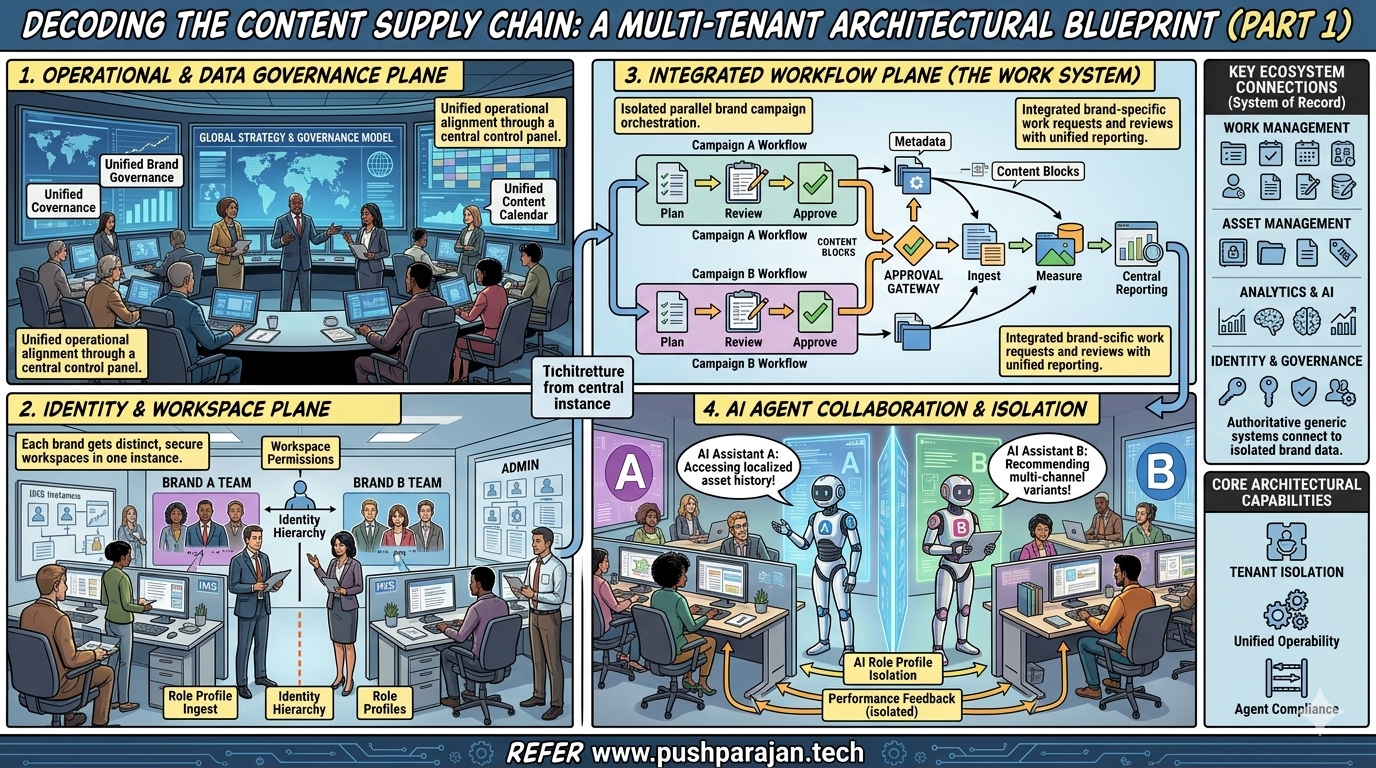
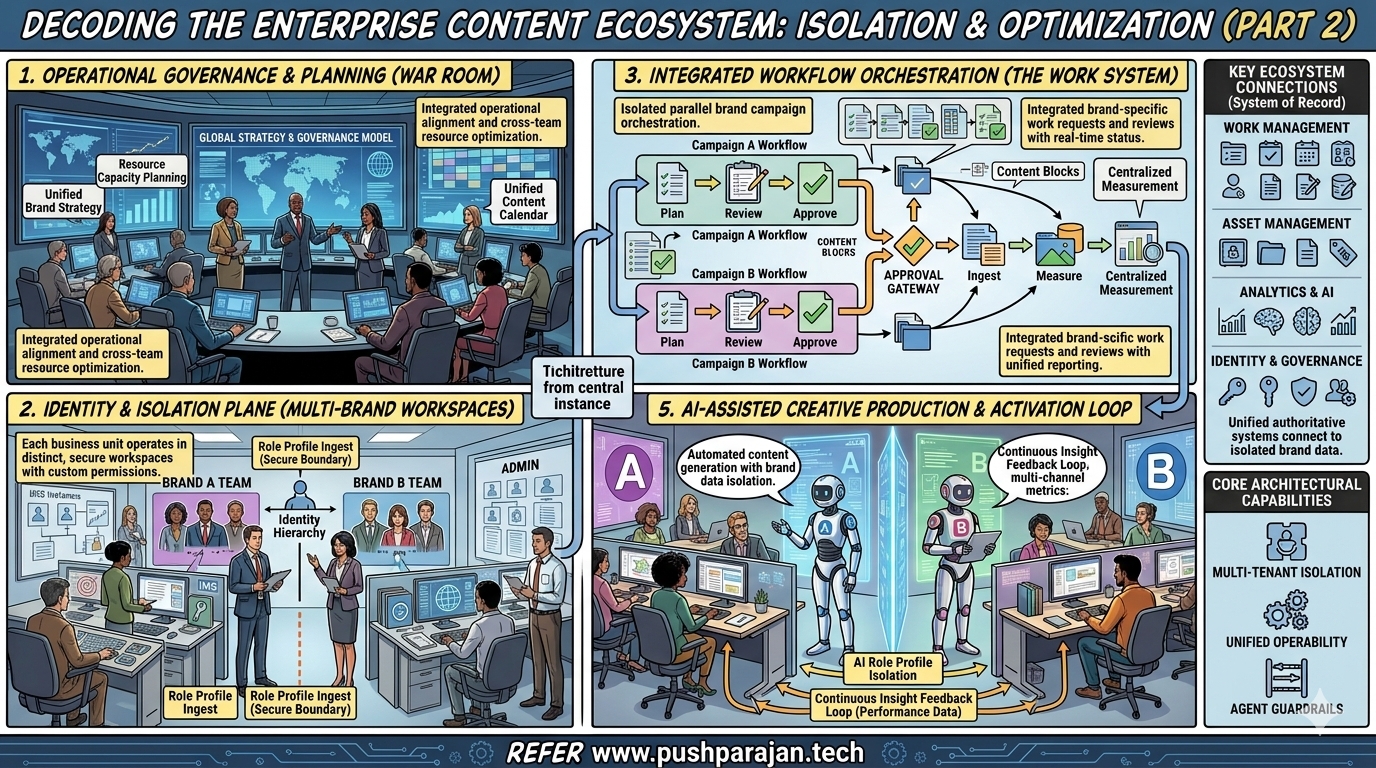
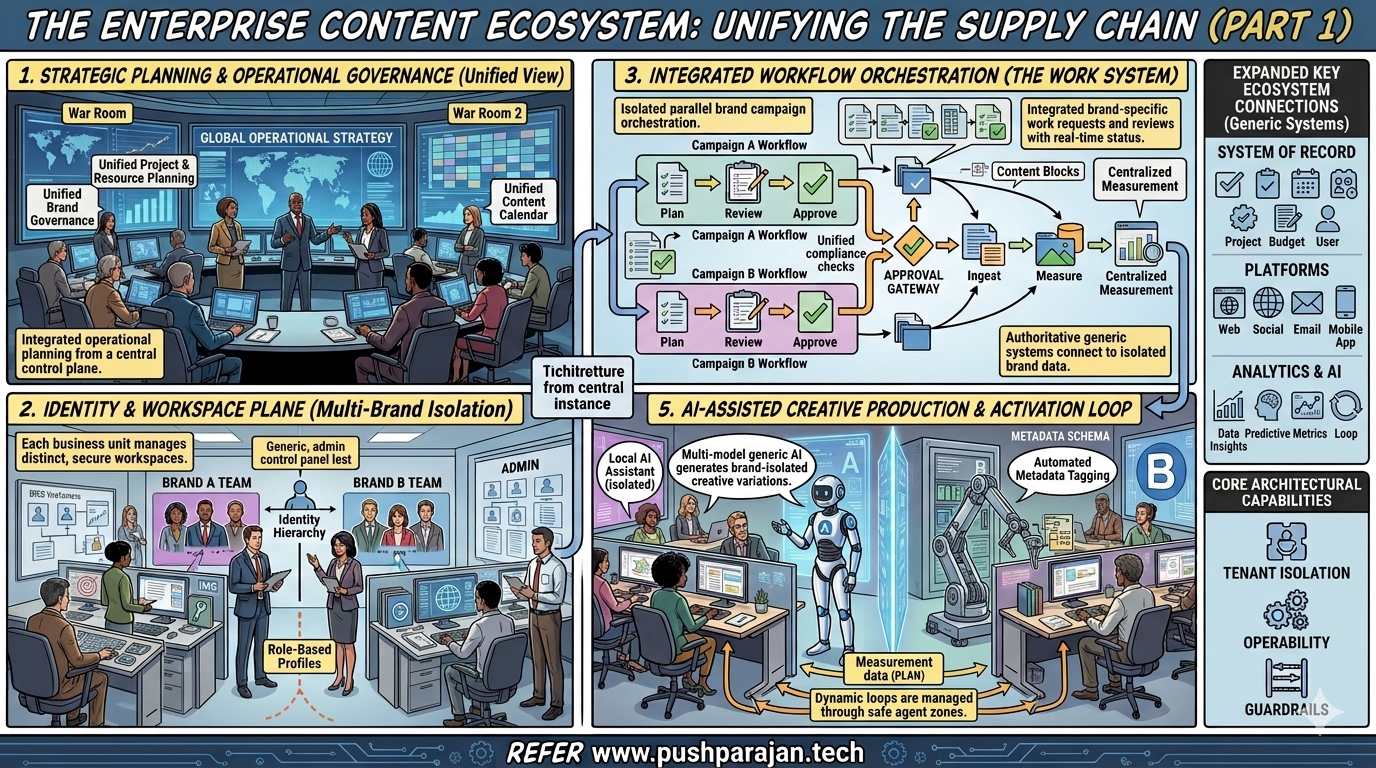
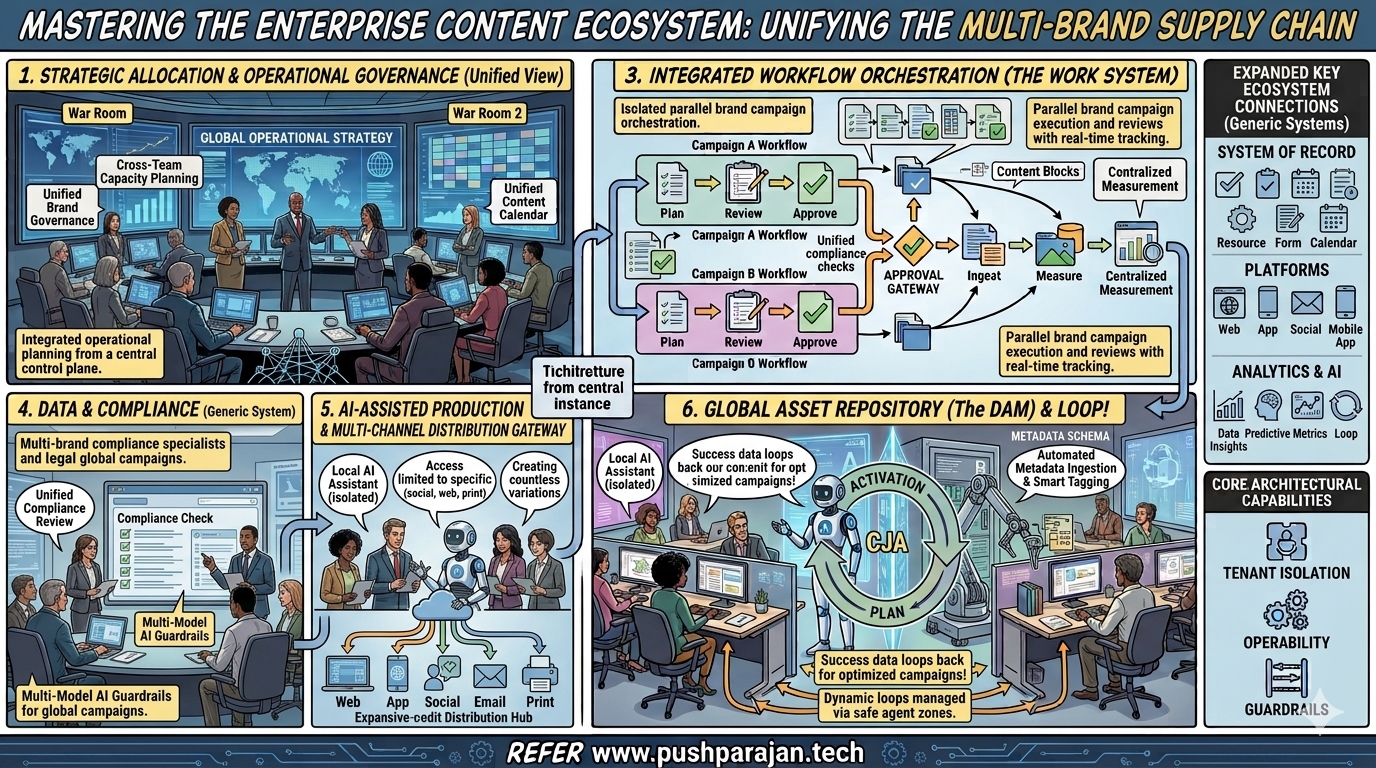
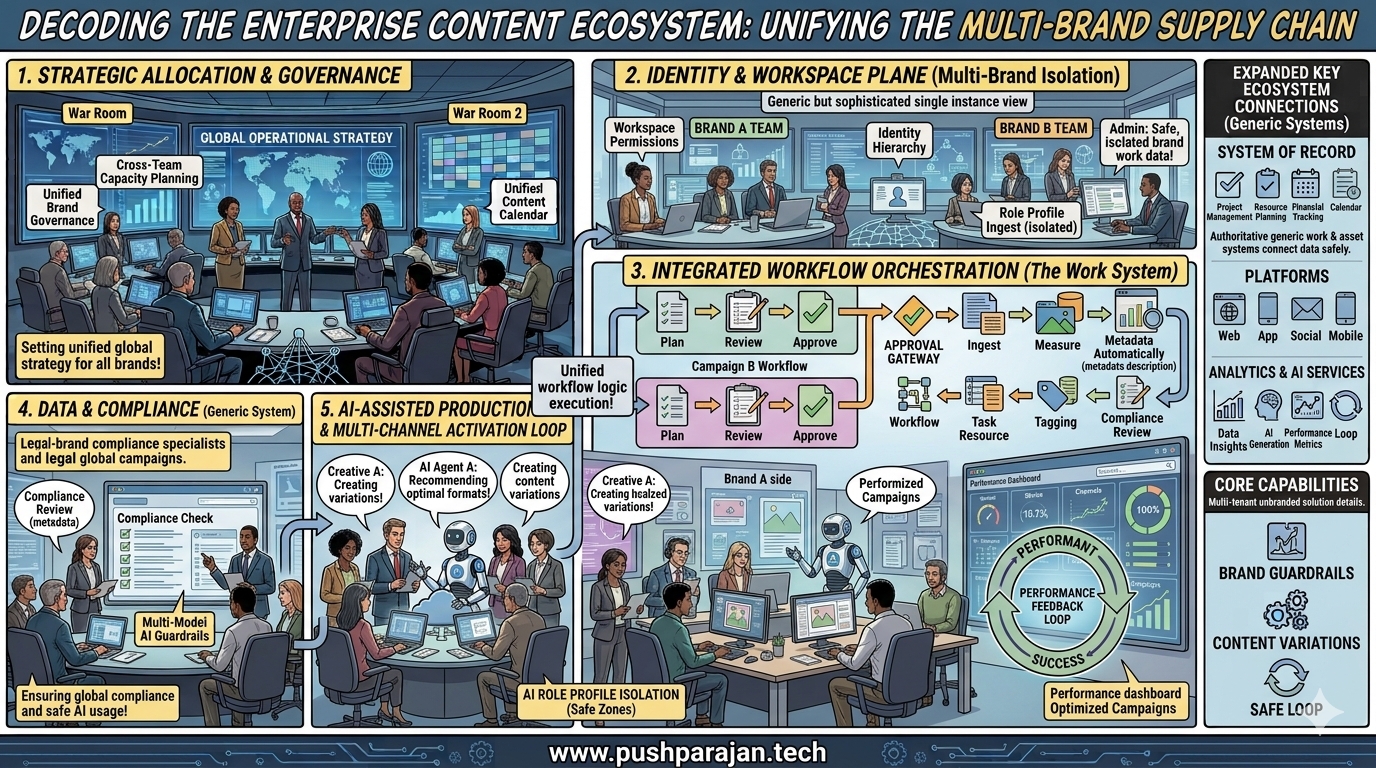
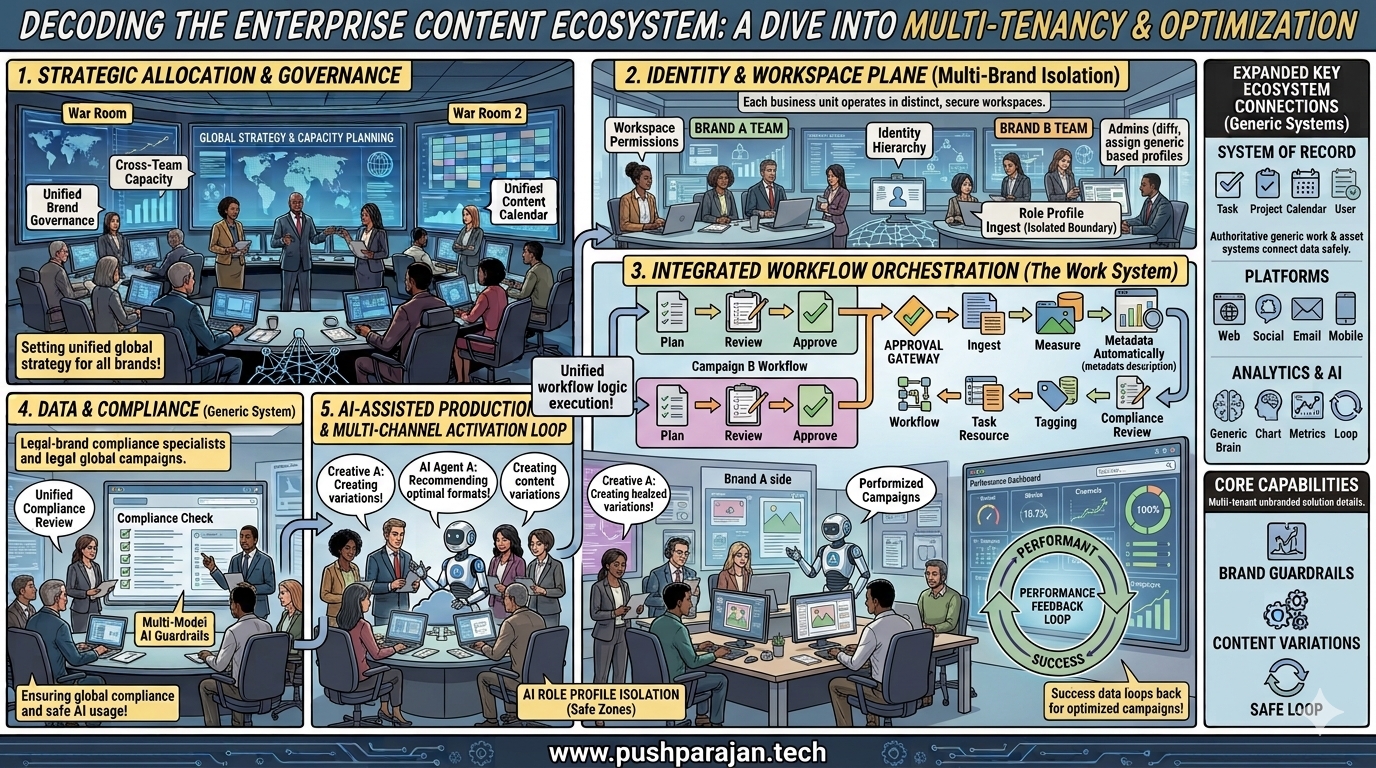
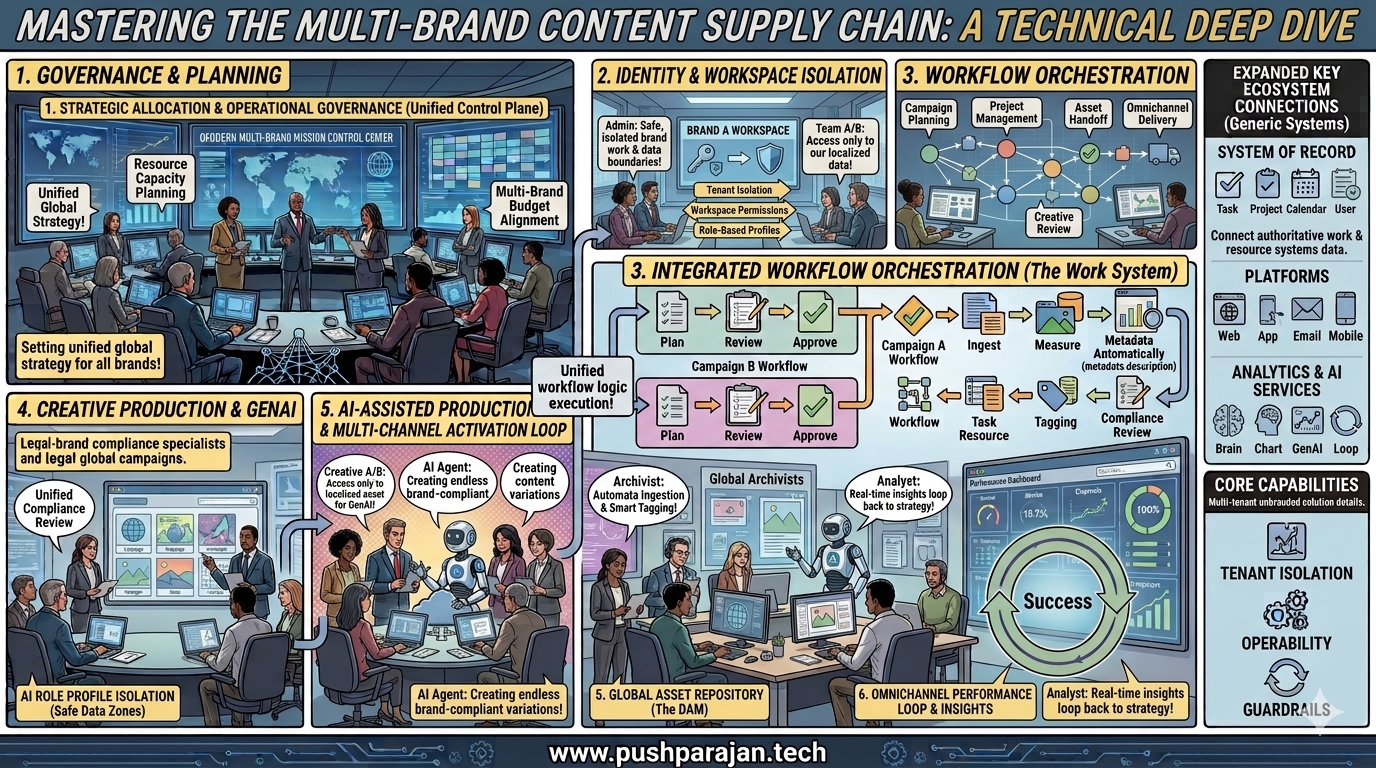
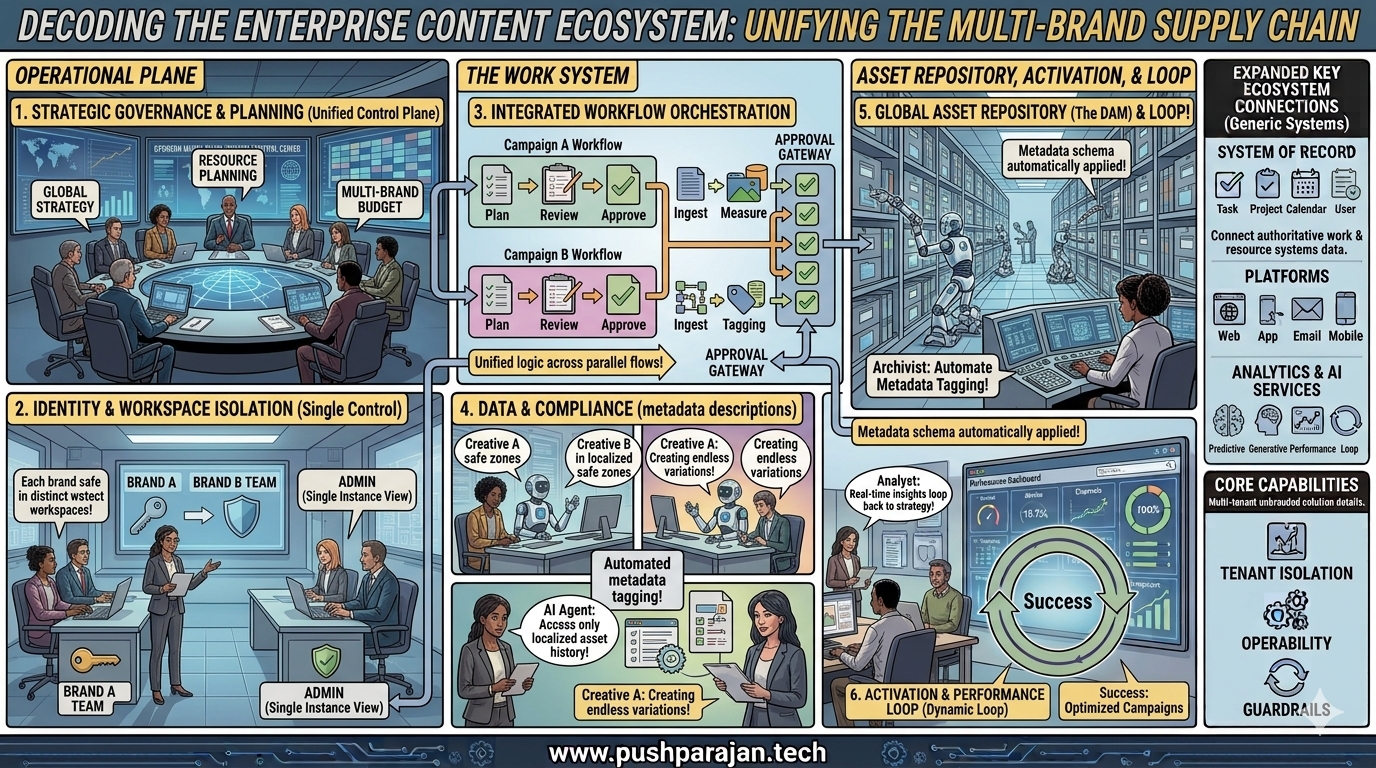
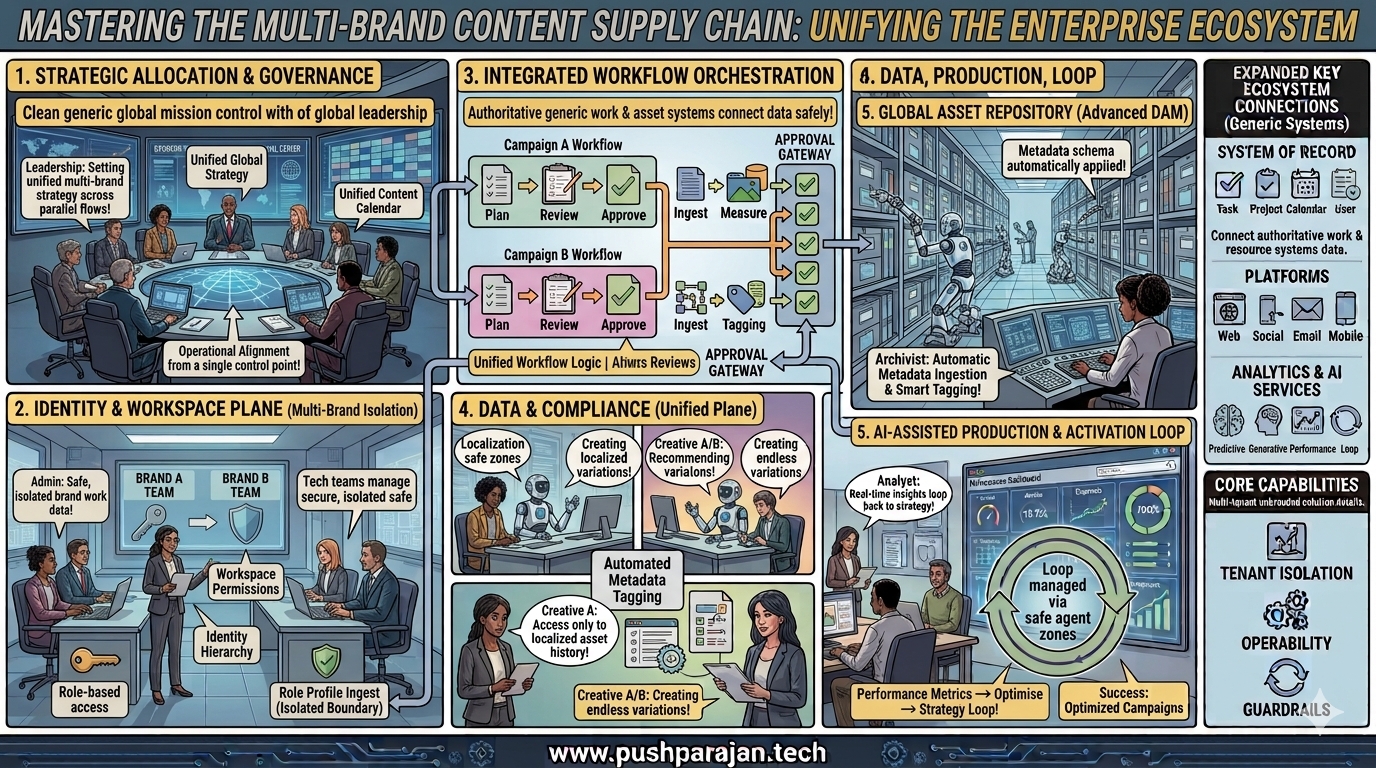
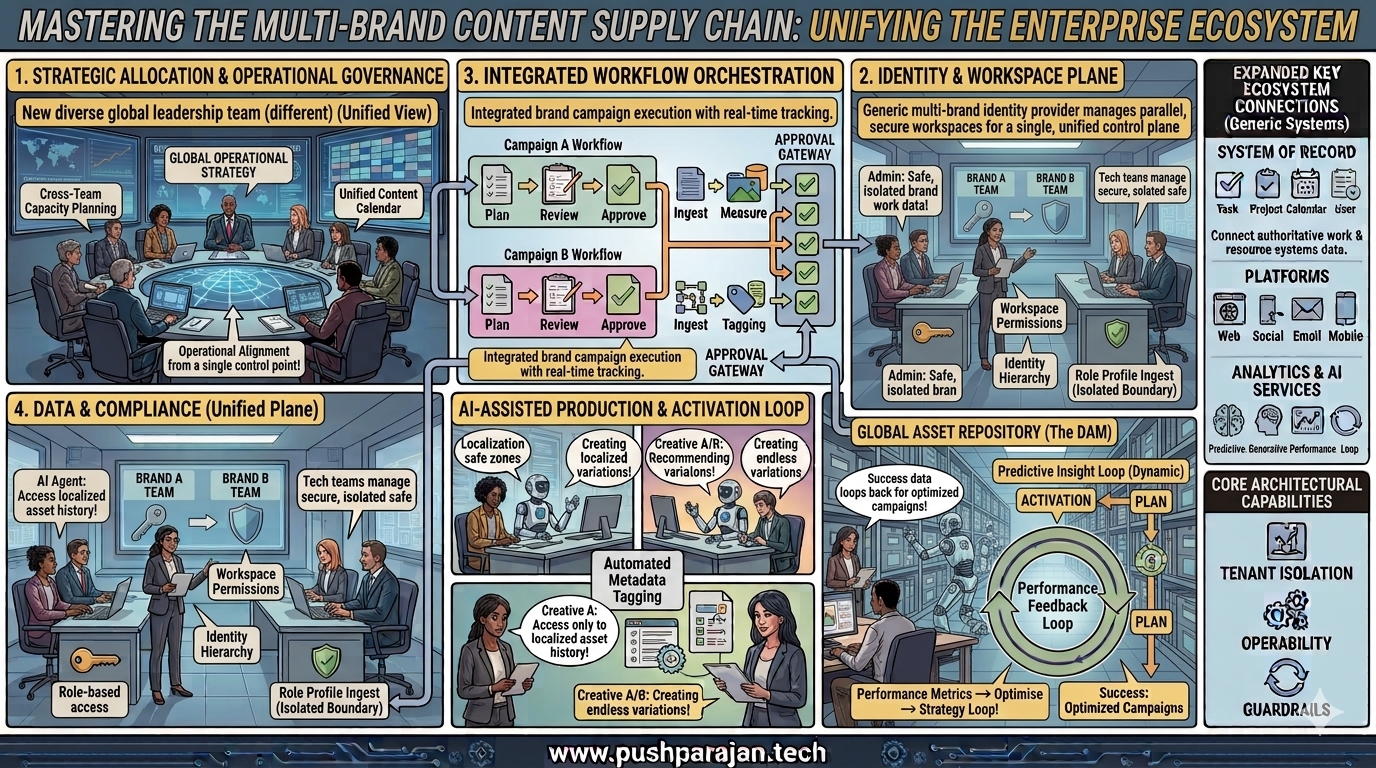
Multi-brand and multi-agency design: why a tenant per brand fragments identity, reporting and workflow, and how groups, profiles and workspaces isolate instead.
Rolling out to many functions: shared core taxonomy, tailored forms and permissions per team, and why personal workspaces break reporting.
When the campaign calendar lives in a spreadsheet, the data model is usually wrong. Workfront Planning for strategy, Workflow for execution.
How to carry campaign metadata from Workfront Planning into Workflow with record conversion and pre-populated custom forms, so nobody re-enters it.
Why cross-team and cross-agency dates slip when each team tracks its own deliverables, and how unified templates and metadata fix the model.
Free-text campaign, channel and business unit fields corrupt reporting. Fix it in the schema, and bring ERP and PIM data in through Fusion.
Attach approved AEM Assets in context from Workfront using Asset Selector or Content Advisor, keep metadata in sync natively, and model clearance as a status.
Meeting a 'single view' requirement across repositories with AEM federated asset management and App Builder references, instead of copying binaries.
Two storage concerns, two systems: Enterprise Storage Model for in-flight files and AEM Assets for approved content, with promotion as a lifecycle event.
Move brand constraints upstream: Brand Guidelines, Firefly Custom Models, a governed claims library and bulk generation with Firefly Services.
An event-driven handoff for Frame.io approvals using webhooks or Custom Actions and Fusion scenarios, plus the polling and email anti-patterns to avoid.
A decision filter for Adobe integrations, and the split between App Builder for UI inside products and Fusion for system-to-system flows.
GenStudio for Performance Marketing covers paid activation; Journey Optimizer and Target cover owned channels, with Workfront and Fusion handling the handoff.
Treat the asset ID like a primary key: durable, immutable and carried from Planning through AEM into activation, so analytics can actually join on it.
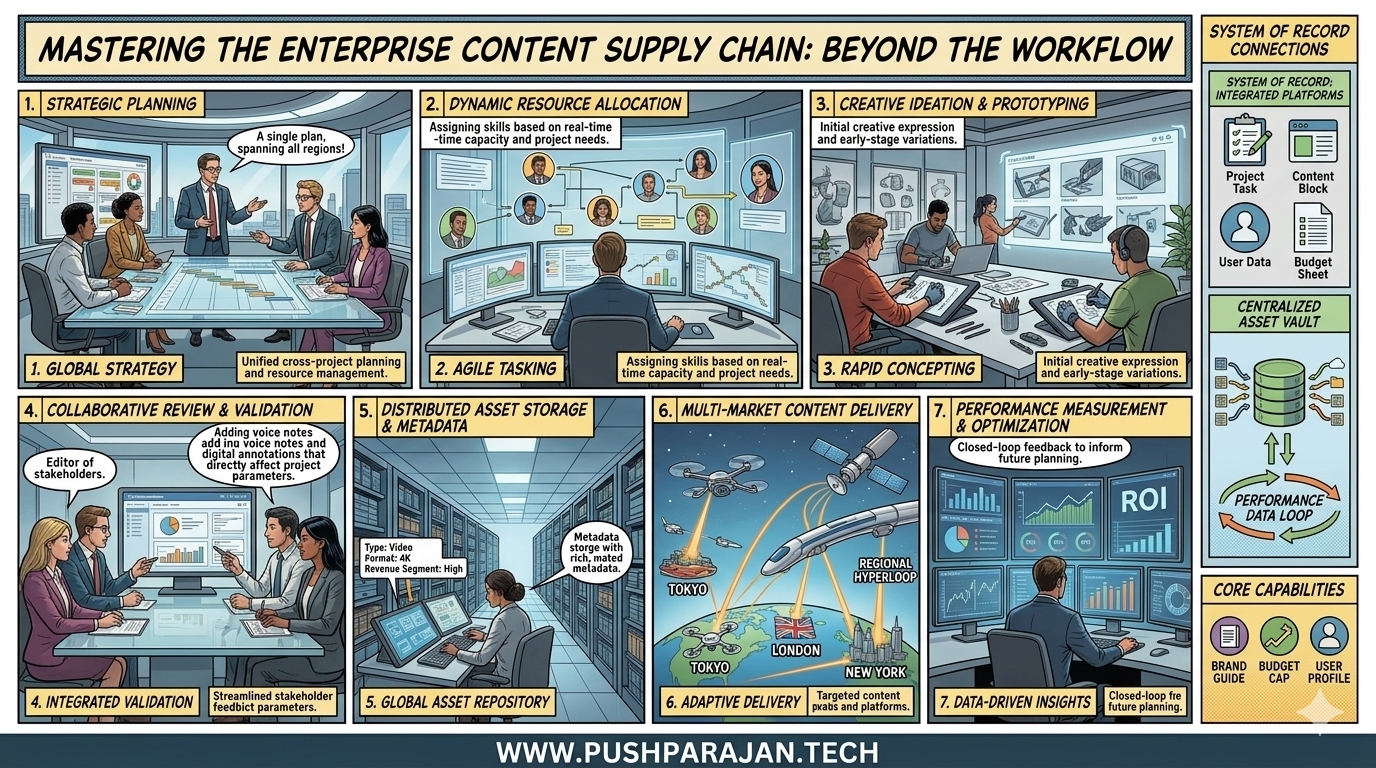
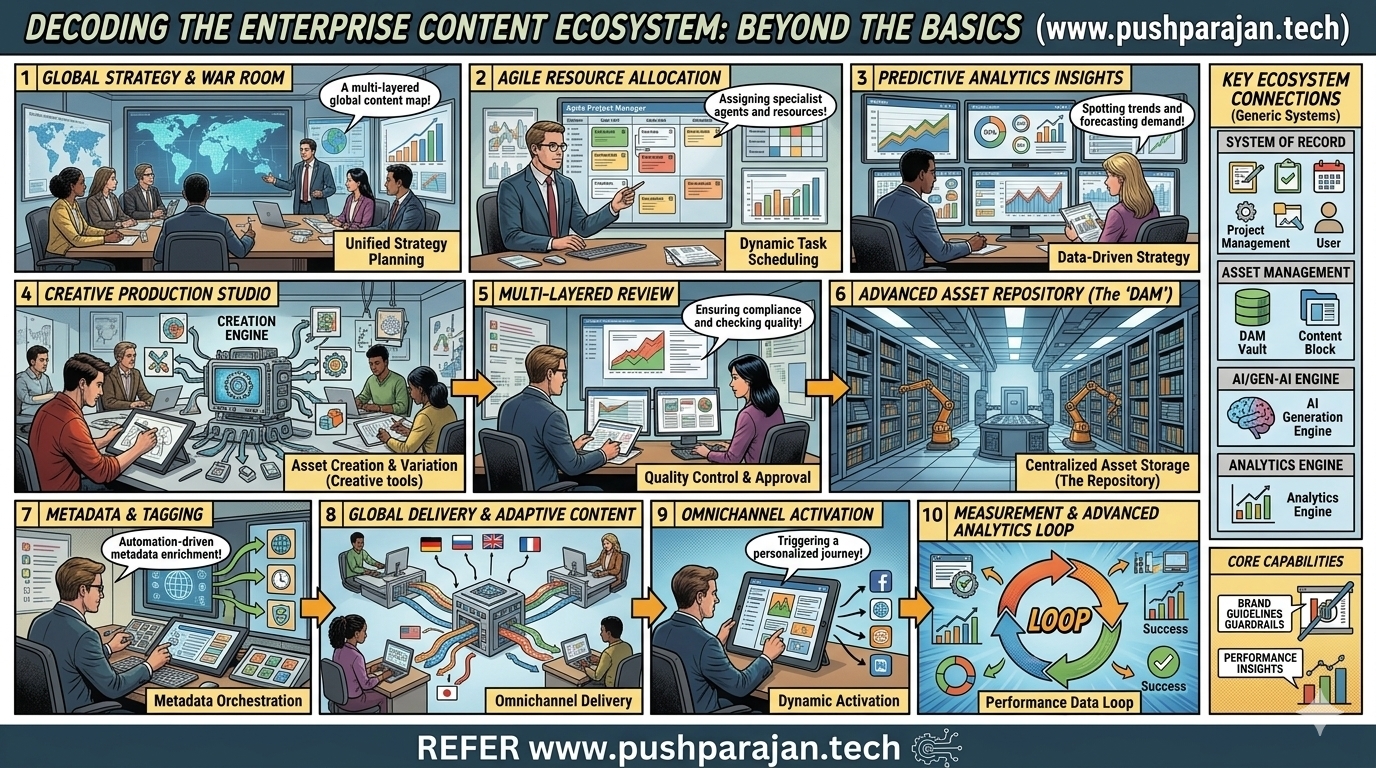
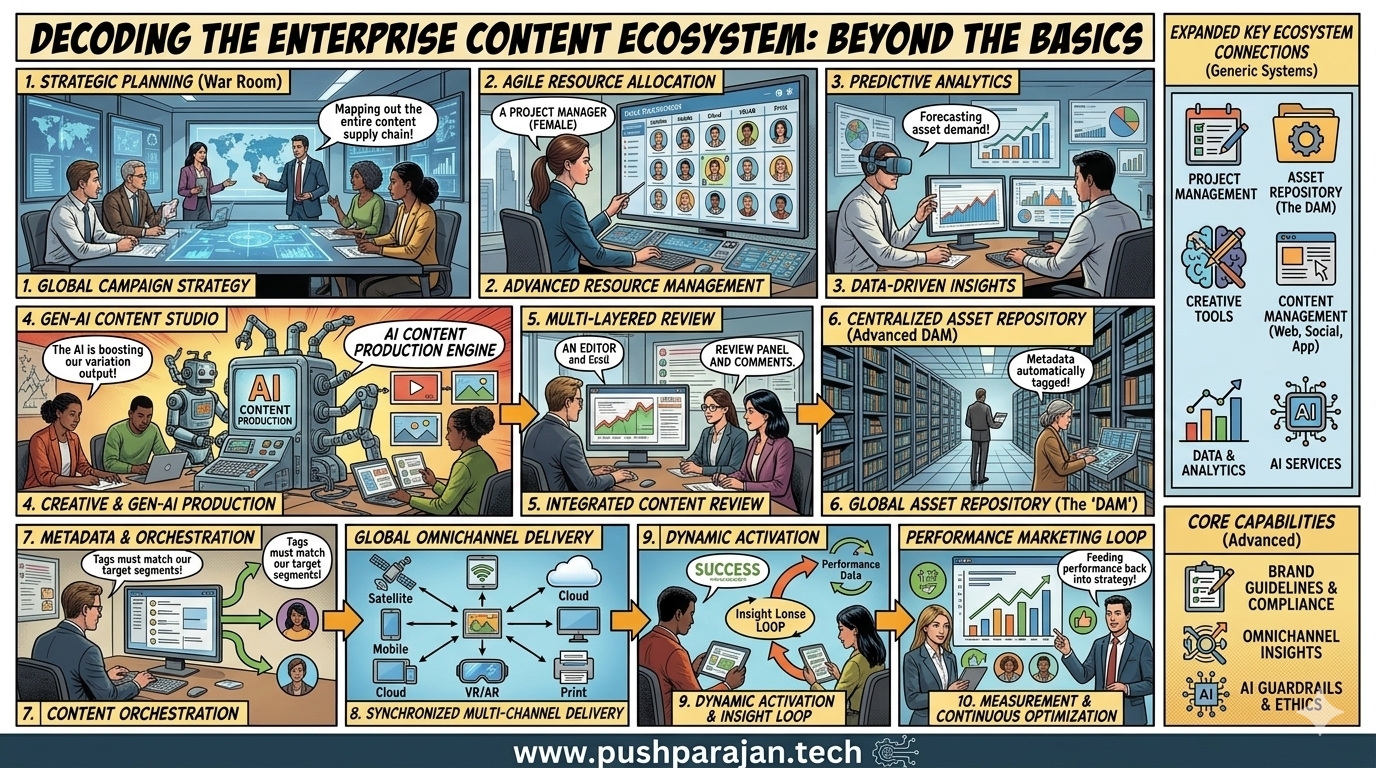
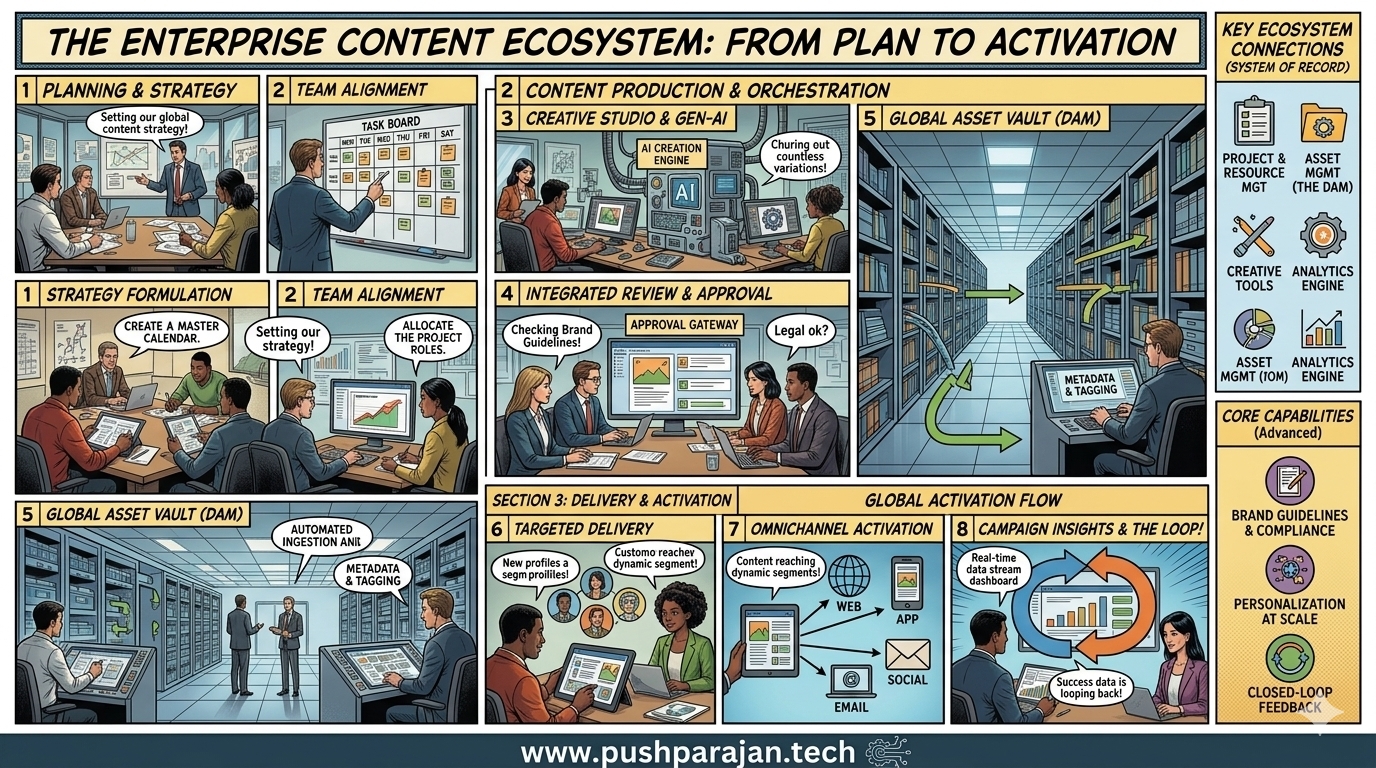
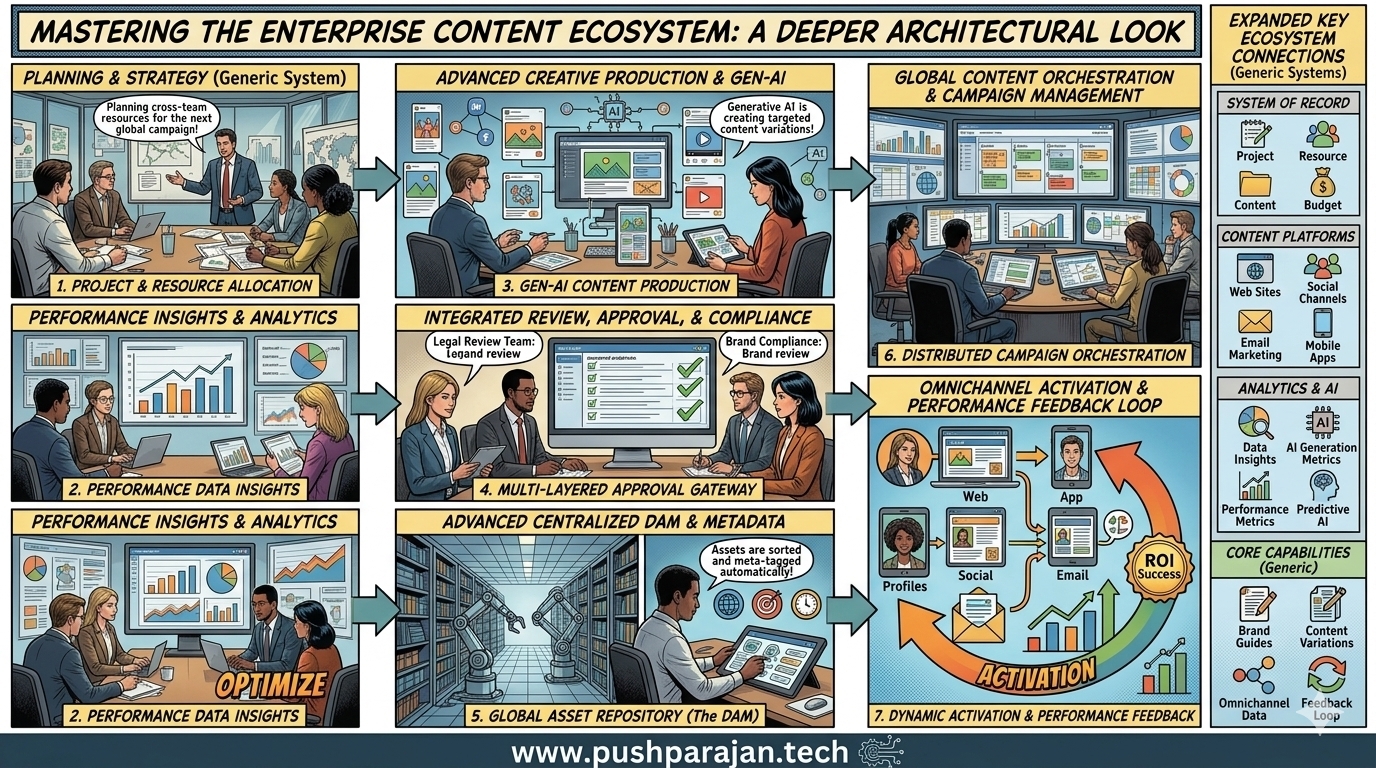
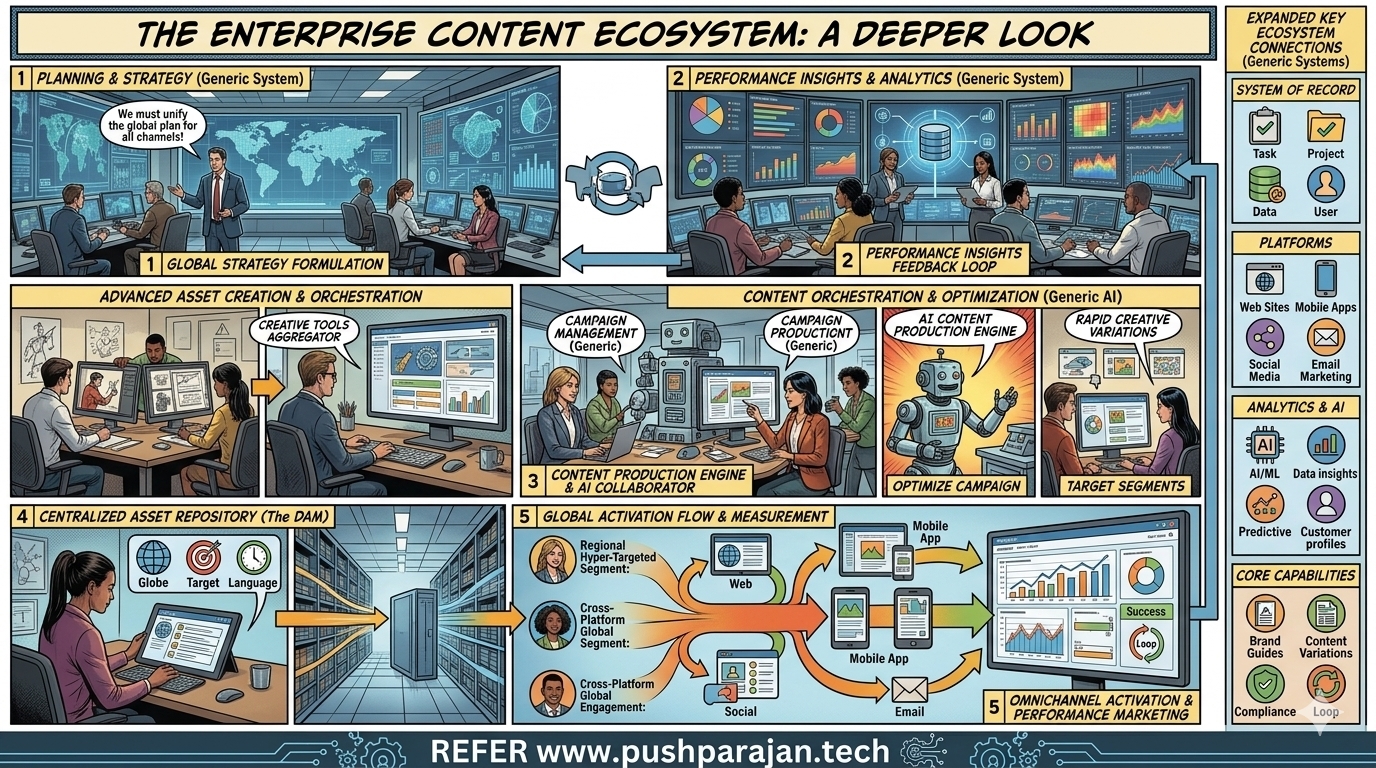
Sequencing a content supply chain build: foundation first, scale last, plus the acceptance tests that show whether the implementation is healthy.
For developers who are keeping Jira, Salesforce, ERP, PIM and agency tools: how Fusion, native connectors and App Builder fit around them.
 Architecture Knowledge Hub